
Uncategorized
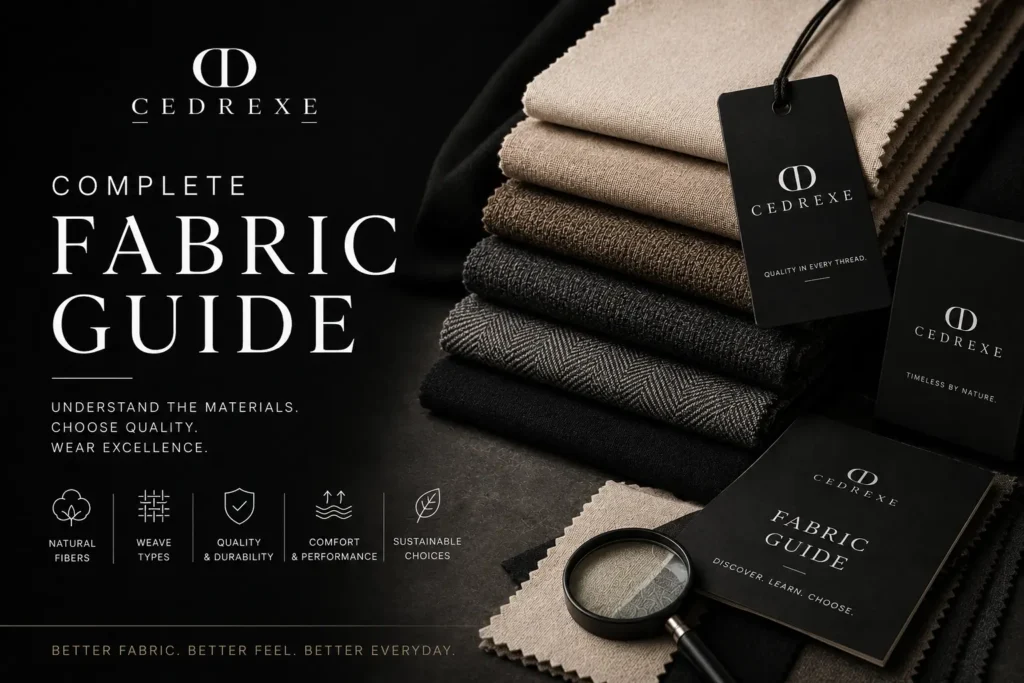
Complete Fabric Guide
Aug
Fabric is the single biggest factor separating premium clothing from ordinary clothing, and it’s also the factor most shoppers understand the least. Two garments can look nearly identical in a photo and perform completely differently once worn, simply because of what they’re made from and how that material was constructed. This guide breaks fabric down in practical terms: what different fibers actually offer, how to read a label with confidence, how to evaluate quality before buying, and how to care for different fabric types so they last.
Understanding fabric isn’t just useful for evaluating CEDREXE’s collection, it’s a skill that applies to any premium clothing purchase, from any brand. That’s the intent behind this guide: to give you a genuinely useful framework, not just a list of marketing terms.
Table of Contents
- Why Fabric Knowledge Matters When Buying Premium Clothing
- How to Read a Fabric Label
- Understanding Fabric Weight
- Natural Fibers Explained
- Synthetic and Semi-Synthetic Fibers Explained
- Fabric Blends: Why They’re Used and What to Look For
- Common Fabric Constructions
- Fabric and Longevity: What Actually Extends a Garment’s Life
- Fabric Guide by Product Category
- How to Evaluate Fabric Quality Before Buying
- Fabric Care Guide by Type
- Common Fabric Myths
- The CEDREXE Approach to Fabric
- Frequently Asked Questions
- Final Thoughts
Why Fabric Knowledge Matters When Buying Premium Clothing
Most clothing decisions are made based on how a garment looks in a photo or on a hanger, with fabric treated as an afterthought. Yet fabric determines nearly everything about how a piece of premium clothing actually performs: how it feels against the skin, how it holds its shape after washing, how long it lasts, and how it ages over years of wear.
Understanding fabric gives you three practical advantages as a shopper:
- You can evaluate quality independently of price. A well-chosen mid-weight cotton can outperform an expensive garment made from a poorly chosen fabric.
- You can predict how a garment will behave before buying it. Fabric composition and weight are strong indicators of drape, warmth, breathability, and durability.
- You can care for clothing properly. Different fibers respond differently to washing, drying, and storage, and understanding this extends the life of every piece you own.
This guide walks through the fibers, weights, and constructions that make up the vast majority of premium clothing, so you can make informed decisions rather than relying on marketing language alone.
How to Read a Fabric Label
A fabric label typically communicates a few key pieces of information, and learning to read it properly is one of the most useful shopping skills you can develop.
Fiber Content
This is usually listed as a percentage breakdown, such as “100% Cotton” or “80% Cotton, 20% Polyester.” The order generally reflects the proportion of each fiber, with the dominant fiber listed first. Fiber content is the strongest predictor of how a fabric will feel, breathe, and age.
Fabric Weight (When Listed)
Some brands include fabric weight, often expressed in GSM (grams per square meter) for knits or ounces per square yard for wovens. This is one of the most useful, and most commonly omitted, pieces of information for evaluating quality, since it directly indicates how substantial the fabric is.
Care Instructions
Symbols or written instructions indicating recommended washing temperature, drying method, and ironing guidance. These aren’t arbitrary, they reflect how the specific fiber content and construction respond to heat, agitation, and moisture.
Country of Manufacture (When Required)
Many regions require garments to disclose where they were manufactured. This indicates production location but doesn’t, on its own, indicate quality, since high- and low-quality garments are produced across the same regions worldwide.
What Labels Don’t Tell You
Labels don’t typically indicate construction quality, stitching density, or finishing details. This is why fiber content and weight should be combined with a physical or visual inspection (covered later in this guide) rather than relied on alone.
Understanding Fabric Weight
Fabric weight is one of the clearest indicators of durability and how substantial a garment will feel, yet it’s rarely explained clearly to shoppers.
What GSM Means
GSM stands for grams per square meter and is the standard unit for measuring knit fabric weight (used for t-shirts, hoodies, sweatshirts, and most knitwear). A higher GSM generally indicates a heavier, denser, more durable fabric, while a lower GSM indicates a lighter, thinner fabric.
As a general guide:
- Lightweight (under 150 GSM): Thin, breathable, suited to warm-weather basics, but more prone to showing wear and can be semi-sheer
- Mid-weight (150–220 GSM): The most common range for premium t-shirts and casual tops, balancing durability with comfort
- Heavyweight (220 GSM and above): Substantial, structured, common in premium hoodies, sweatshirts, and heavier knitwear
These ranges are general guidelines rather than strict rules, and the “right” weight depends on the garment’s intended use, a lightweight summer t-shirt and a heavyweight winter hoodie are both appropriate for their context.
Weight for Woven Fabrics
Woven fabrics (used for shirts, structured pants, and some jackets) are typically measured in ounces per square yard rather than GSM. Lighter wovens suit shirts and warm-weather pieces, while heavier wovens suit structured outerwear and colder-weather bottoms.
Why Weight Isn’t the Only Factor
While weight is a strong indicator of durability, it isn’t the whole picture. Fiber quality, weave or knit density, and finishing all interact with weight to determine how a fabric ultimately performs. A heavy but poorly constructed fabric can still underperform a well-constructed lighter one.
A Practical Weight Comparison
To make this concrete: a 150 GSM t-shirt and a 220 GSM t-shirt can look almost identical folded on a shelf, but the difference becomes obvious once worn. The lighter fabric tends to show more movement and drape closer to the body, while the heavier fabric holds a more structured shape and typically resists show-through and pilling for longer. Neither is objectively better, a lightweight tee suits a hot climate or an under-layer, while a heavier one suits a standalone, cooler-weather piece, but knowing the difference helps set realistic expectations before buying.
Natural Fibers Explained
Natural fibers are derived from plant or animal sources and are among the most common materials in premium clothing.
Cotton
Cotton is the most widely used natural fiber in casual premium clothing, valued for its breathability, softness, and durability. Higher-quality cotton typically uses longer fibers (often referred to as long-staple or combed cotton), which produce a smoother, stronger yarn than shorter, lower-grade cotton fibers. Cotton is well suited to t-shirts, shirts, and casual knitwear, though it can shrink if not cared for properly.
Wool
Wool, most commonly derived from sheep, is prized for its natural insulation, breathability, and resilience. It’s a common choice for knitwear and structured outerwear because it holds its shape well and resists wrinkling. Wool can vary significantly in softness and fineness depending on the specific type and grade, which is part of why wool garments range widely in feel and price.
Linen
Linen, made from the flax plant, is highly breathable and well suited to warm-weather clothing. It has a distinctive textured drape and tends to wrinkle more readily than cotton, which is generally considered part of its natural character rather than a flaw. Linen is less commonly used in casual streetwear categories and more common in shirting and warm-weather layers.
Silk
Silk is a fine, smooth natural fiber known for its drape and sheen. It’s less commonly used in everyday casual premium clothing due to its delicate care requirements, but it does appear in select linings, blends, and finer garment details.
Comparing Natural Fibers at a Glance
| Fiber | Key Strength | Best Suited For | Care Consideration |
|---|---|---|---|
| Cotton | Breathability, durability | T-shirts, shirts, casual knitwear | Can shrink without care |
| Wool | Insulation, shape retention | Knitwear, structured outerwear | Needs gentle washing |
| Linen | Breathability, texture | Warm-weather shirting | Wrinkles readily |
| Silk | Drape, sheen | Linings, fine details | Delicate, often hand-wash only |
Synthetic and Semi-Synthetic Fibers Explained
Synthetic and semi-synthetic fibers play an important role in premium clothing, often improving durability, shape retention, or performance when used thoughtfully.
Polyester
Polyester is a durable, quick-drying synthetic fiber often used on its own or blended with natural fibers to improve shape retention and reduce wrinkling. High-quality polyester, and polyester blends, can offer excellent durability, though lower-grade polyester can feel less breathable than natural fibers.
Nylon
Nylon is valued for its strength and abrasion resistance, making it common in outerwear, bags, and technical-leaning pieces where durability under stress matters most.
Elastane and Spandex
Elastane (also known by the brand name Spandex or Lycra) is typically blended in small percentages with other fibers to add stretch and recovery. Even a small percentage (often 2–5%) can significantly improve how well a garment retains its shape after repeated wear and movement.
Viscose, Rayon, and Modal
These are semi-synthetic fibers derived from processed plant cellulose, offering a soft, often silk-like drape at a lower cost than natural silk. They’re commonly used in blends to add softness and drape to knitwear and shirting, though they can be less durable than cotton or wool on their own and often require more careful washing.
Fabric Blends: Why They’re Used and What to Look For
Blended fabrics combine two or more fibers to balance their individual strengths and weaknesses, and are extremely common in premium clothing.
Why Brands Use Blends
A pure natural fiber offers excellent breathability but can wrinkle easily or lose shape over time. Adding a small percentage of a synthetic fiber like polyester or elastane can improve shape retention and reduce wrinkling, while still preserving most of the natural fiber’s comfort and breathability. Blends are a deliberate design choice, not necessarily a shortcut or a sign of lower quality.
Common, Well-Regarded Blends
- Cotton-polyester — improves durability and wrinkle resistance while retaining softness
- Cotton-elastane — adds stretch and shape recovery, particularly useful in fitted pieces
- Wool-nylon — improves durability and abrasion resistance in knitwear
- Cotton-modal — adds a softer drape and smoother hand-feel to basics
What to Watch For in Blends
The ratio matters. A blend that’s mostly natural fiber with a small percentage of synthetic fiber added for performance (for example, 95% cotton, 5% elastane) is different from a blend that’s majority synthetic with a small amount of natural fiber added for softness. Reading the full percentage breakdown, not just the fiber names, gives a clearer picture of how the fabric will actually perform.
Common Fabric Constructions
Beyond fiber content, how a fabric is constructed, woven or knitted, significantly affects its look, stretch, and durability.
Woven vs. Knit
Woven fabrics are created by interlacing yarns at right angles, producing a structured fabric with minimal stretch, commonly used for shirts, structured pants, and some jackets. Knit fabrics are created by looping yarns together, producing a fabric with natural stretch and a softer drape, commonly used for t-shirts, hoodies, and sweatshirts.
Jersey
A basic knit construction, lightweight and stretchy, commonly used for t-shirts and casual tops. Jersey is prized for its softness and breathability, though quality varies significantly based on fiber content and knit density.
French Terry
A knit fabric with a looped underside and a smoother face, commonly used in sweatshirts and lighter hoodies. It offers more structure and warmth than basic jersey while remaining relatively lightweight and breathable.
Fleece
A brushed knit fabric with a soft, insulating pile, commonly used in heavier hoodies and sweatshirts for warmth. Fleece quality varies based on the density of the brushing and the underlying fiber content.
Twill
A woven construction with a distinctive diagonal weave pattern, valued for its durability and structure, commonly used in pants and some jackets.
Poplin
A tightly woven, smooth fabric commonly used in shirting, valued for its crisp finish and durability.
Ribbing
A stretchy knit construction typically used at cuffs, hems, and collars to help a garment hold its shape and provide a snug, recovering fit at these high-stress points.
Fabric and Longevity: What Actually Extends a Garment’s Life
Beyond fiber content and initial construction, a few general factors influence how long a fabric performs well over its lifetime, and they’re worth understanding independently of any single brand’s claims.
Fiber Length and Yarn Quality
Within the same fiber type, quality can vary significantly. Cotton, for example, ranges from short-staple to long-staple fibers, with longer fibers generally producing smoother, stronger, more durable yarn. This is why two garments both labeled “100% cotton” can perform very differently over time.
Finishing Treatments
Fabrics are often treated after weaving or knitting to adjust softness, shrinkage, or wrinkle resistance. Some finishes are permanent and improve long-term performance, while others (like certain softening treatments) wash out after repeated cycles. This is part of why a garment can feel different after the first few washes than it did new.
How Garments Are Actually Used
Fabric longevity isn’t determined by materials alone. Rotating garments rather than wearing the same piece daily, following recommended washing temperatures, and avoiding excessive tumble-drying all meaningfully extend how long a fabric continues to perform well, regardless of its starting quality.
A General Note on Sourcing and Sustainability
Fabric sourcing and sustainability claims vary significantly across the fashion industry, and terms like “eco-friendly” or “sustainable” aren’t standardized, which makes them difficult to verify from a label alone. If sustainability credentials matter to your purchasing decisions, look for specific, named certifications rather than general marketing language, and don’t hesitate to contact a brand directly for clarification on sourcing practices that aren’t detailed on the product page.
Different garment categories call for different fabric priorities. Here’s a practical breakdown across common premium clothing categories.
T-Shirts and Oversized T-Shirts
Look for a mid-to-heavyweight cotton or cotton-blend jersey, generally in the 180–240 GSM range for a substantial, durable feel. Combed or ring-spun cotton tends to offer a smoother, more durable finish than basic carded cotton.
Hoodies and Sweatshirts
French terry or fleece constructions, typically heavier weight cotton or cotton-polyester blends, offer the best balance of warmth, structure, and durability for this category.
Shirts and Polo Shirts
Shirting typically favors woven cotton or cotton blends with a tight weave (poplin or oxford cloth are common examples) for structure and durability. Polo shirts commonly use a piqué knit, a textured knit construction that adds breathability and structure to the fabric.
Knitwear
Wool, cotton, or blends of the two are common, with fiber quality and knit density being the primary indicators of how well a sweater will resist pilling and hold its shape over time.
Jackets
Jacket fabric varies widely by intended use, from tightly woven cotton or cotton-blend shells to more technical synthetic fabrics for weather resistance. Lining quality and fabric weight both play a significant role in how a jacket performs.
Pants and Shorts
Twill weaves and cotton-elastane blends are common, offering structure alongside enough stretch for comfortable movement throughout the day.
Tracksuits
Typically French terry or fleece constructions similar to hoodies and sweatshirts, chosen for a balance of comfort, warmth, and structure across matching top and bottom pieces.
How to Evaluate Fabric Quality Before Buying
Combining the knowledge from this guide with a few practical checks makes it possible to evaluate fabric quality with real confidence.
Check the Fiber Content and Weight
Start with the label. Fiber content tells you what the fabric is made from, and weight (when listed) tells you how substantial it is. Together, these two data points predict most of a fabric’s real-world performance.
Hold It Up to Light
If you’re shopping in person, holding a lightweight garment up to light reveals how dense the weave or knit actually is. A fabric that’s highly see-through is generally lower in both weight and density.
Feel for Weight and Recovery
A premium fabric should feel substantial without being stiff, and should return to its original shape after a gentle stretch. Fabric that stays visibly stretched out after light pulling is more likely to lose its shape with regular wear.
Check the Fabric at Seams and Stress Points
Fabric at seams, cuffs, and hems should lie flat and even, without puckering or visible strain. Puckered seams can indicate either a lower-quality fabric or inconsistent construction, both worth noting.
Read Product Descriptions Critically
Specific, detailed fabric information (composition, weight, construction type) is generally a stronger signal of quality and transparency than vague marketing language like “luxurious feel” or “premium fabric” without supporting detail.
Fabric Care Guide by Type
Proper care extends the life of every fabric type, but the right approach varies by fiber and construction.
Cotton and Cotton Blends
Wash in cold to warm water to reduce shrinkage and fading, and avoid high heat when drying. Cotton is generally durable and forgiving, but repeated high-heat drying accelerates fiber breakdown over time.
Wool and Wool Blends
Wash on a gentle or wool-specific cycle in cold water, or hand wash where recommended, and always air-dry flat to prevent stretching or felting. Wool is more delicate under agitation and heat than cotton.
Synthetic Fabrics (Polyester, Nylon)
Generally durable and machine washable in cold water, synthetic fabrics are prone to retaining odor if washed at low temperatures repeatedly without adequate detergent, so following the specific care label helps maintain freshness alongside durability.
Elastane-Blended Fabrics
Avoid high heat in both washing and drying, since excessive heat can degrade the elastane fibers over time, reducing the fabric’s stretch and recovery.
Fleece and French Terry
Wash inside out in cold water to protect the brushed or looped surface, and air-dry or use low heat to preserve loft and softness.
General Storage Guidance
Fold heavier knitwear rather than hanging it to avoid stretching at the shoulders, and use sturdy hangers for structured pieces like shirts and jackets to help them maintain their shape between wears.
Common Fabric Myths
A few persistent myths make it harder to evaluate fabric quality accurately.
“Natural Fibers Are Always Higher Quality Than Synthetics”
Fiber type alone doesn’t determine quality. A high-quality synthetic or blend can outperform a low-grade natural fiber in durability and shape retention. Quality depends on the specific grade of the fiber and how it’s constructed, not simply whether it’s natural or synthetic.
“Heavier Fabric Always Means Better Quality”
Weight is a strong indicator of durability, but it isn’t the only factor. A heavy fabric with poor fiber quality or loose construction can still underperform a well-made, moderately weighted alternative.
“Softness at the Store Means High-Quality Fabric”
Softness at the point of sale can come from fabric softeners or finishing treatments that wash out after the first few cycles. A more reliable test is how a fabric performs after several wash cycles, not how it feels brand new.
“All Blends Are a Sign of Lower Quality”
Thoughtfully chosen blends are a deliberate design decision that can improve durability, shape retention, and comfort. The ratio and purpose of the blend matter far more than the simple fact that a garment isn’t 100% one fiber.
The CEDREXE Approach to Fabric
Fabric choice sits at the center of CEDREXE’s broader commitment to Premium Quality and Authentic Craftsmanship. Every category in our collection, from premium and oversized t-shirts to knitwear, jackets, and tracksuits, is designed with fabric weight, construction, and comfort considered together, rather than fabric being an afterthought to design.
This reflects our broader brand values: Comfort Without Compromise and Freedom of Movement aren’t just design language, they’re directly tied to the fabric decisions behind each garment. A jacket or pair of pants can only move with you the way our motto describes if the underlying fabric is chosen to support that movement.
We approach fabric information the same way we approach the rest of our content: clearly, and without exaggeration. This guide reflects that same standard, giving you a genuine framework for evaluating fabric, whether or not the garment in question is one of ours.
Frequently Asked Questions
What is the best fabric for an everyday t-shirt?
A mid-to-heavyweight cotton or cotton-blend jersey, generally in the 180–240 GSM range, tends to offer the best balance of softness, breathability, and durability for everyday wear.
Is a higher GSM always better?
Not necessarily. Higher GSM generally means more durable and substantial, but the right weight depends on the garment’s purpose, a lightweight GSM suits warm-weather basics, while a heavier GSM suits cold-weather layers like hoodies and sweatshirts.
Are fabric blends lower quality than 100% natural fabrics?
No. Blends are often a deliberate choice to combine the strengths of different fibers, such as adding elastane for stretch or polyester for wrinkle resistance, and can outperform a lower-grade single-fiber fabric.
How can I tell fabric quality from an online listing?
Look for specific fiber content and weight information rather than vague marketing language, and check product photography closely for how the fabric drapes and whether it appears see-through or overly stiff.
Why does my clothing shrink after washing?
Shrinkage is most common with natural fibers like cotton and wool when exposed to high heat during washing or drying. Following the specific care label, generally cold water and lower heat drying, significantly reduces shrinkage risk.
What fabric is best for cold weather layering?
Wool and wool blends offer strong natural insulation, while heavyweight cotton fleece or French terry provides warmth with a softer, more casual feel. Both work well as mid-layers under a structured outer jacket.
Does fabric weight affect how a garment should be styled?
Indirectly, yes. Heavier fabrics tend to hold structure and drape cleaner in tailored or oversized silhouettes, while lighter fabrics drape more closely to the body, which can influence how a piece looks depending on the intended fit.
What does “combed” or “ring-spun” cotton actually mean?
Both refer to processing methods that remove shorter, weaker fibers and impurities before spinning, producing a smoother, stronger, more durable yarn than standard carded cotton. Garments labeled this way generally offer better durability and a softer hand-feel, though it’s still worth checking fabric weight alongside it.
Can I tell fabric quality just from the price?
Not reliably. Price reflects many factors beyond fabric, including brand positioning, production location, and marketing costs. Checking fiber content, weight, and construction details directly is a more accurate way to judge quality than price alone.
Final Thoughts
Fabric knowledge turns clothes shopping from a guessing game into an informed decision. Understanding fiber content, weight, and construction gives you the tools to evaluate any garment, from any brand, on its actual merits rather than its marketing.
At CEDREXE, fabric choice is central to how we approach premium clothing across every category we design. If you’re building a wardrobe around genuinely well-made pieces, we invite you to explore the CEDREXE collection and experience the difference that considered fabric choices make in everyday comfort and durability.
